Radio's journey from crackling analog transmissions to pristine digital streams represents one of the most profound shifts in telecommunications history. And I'm not talking about some gradual, gentle transition here. This was a full-blown revolution that forced engineers, broadcasters, and hobbyists to rethink everything they knew about wireless communication.
Analog radio ruled the airwaves for decades, built on amplitude modulation (AM) and frequency modulation (FM) principles that Alexander Popov and Guglielmo Marconi would recognize. These systems worked by continuously varying either the amplitude or frequency of a carrier wave to match the audio signal. Simple, elegant, and prone to every kind of interference imaginable. Static from thunderstorms? You got it. Noise from electrical equipment? Absolutely. The analog signal degraded with distance, picking up unwanted artifacts like a magnet attracts iron filings.
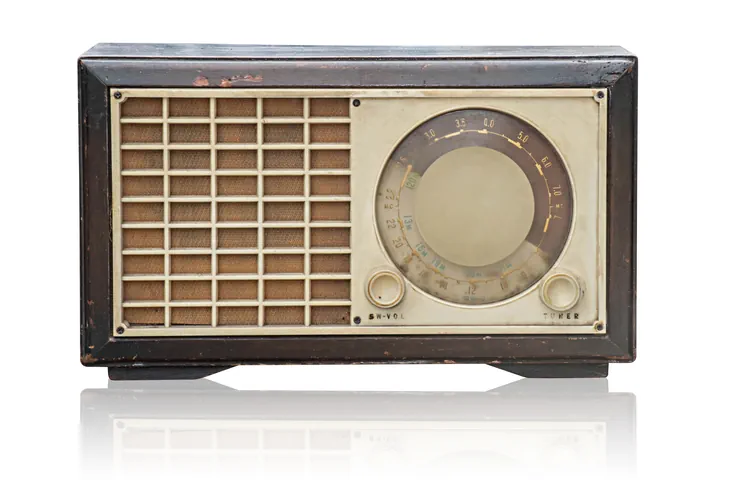
But here's what people forget: analog radio was miraculous for its time. It connected continents, saved lives at sea, and brought news and entertainment into homes across the globe. My grandfather used to tinker with old tube radios in his garage, coaxing distant stations out of the ether late at night. That sense of wonder, of pulling voices from thin air, hasn't disappeared even if the technology has moved on.
The problems with analog became glaringly obvious as our hunger for bandwidth exploded. Each station needed its own slice of the electromagnetic pie, and there's only so much to go around. Interference between adjacent channels was rampant. Audio quality suffered, especially at the fringes of a station's coverage area. And forget about sending data alongside your audio, that wasn't happening in any meaningful way.
Enter digital radio, stage left. The transition didn't happen overnight, and it certainly wasn't smooth. Digital Audio Broadcasting (DAB) emerged in Europe during the 1990s, promising crystal-clear audio and efficient use of the frequency band through something called orthogonal frequency-division multiplexing (OFDM). That's a mouthful, but the concept is brilliant: instead of one big carrier wave, you split the signal across hundreds of smaller carriers, each transmitting a piece of the data stream. It's like distributing your eggs across multiple baskets, except the baskets are all moving in perfect synchronization.
The United States took a different path with HD Radio, a hybrid system that layers digital signals on top of existing analog broadcasts. This approach avoided the chicken-and-egg problem of requiring entirely new infrastructure and receivers, but it also meant compromises in audio quality and coverage. The debate over which standard was superior got heated, and I mean people were genuinely angry about spectral efficiency and codec choices. Radio nerds don't mess around.
Digital radio brought gifts that analog could never deliver. Error correction algorithms meant that a signal either arrived intact or not at all, no more gradual degradation into noise. Multiplexing allowed broadcasters to squeeze multiple programs into a single frequency allocation. Metadata tags could display song titles, artist names, and even album artwork. Traffic information, weather alerts, and emergency broadcasts became integrated seamlessly into the transmission.
Software-defined radios (SDRs) changed the game entirely, and this is where things get truly fascinating. Traditional radios used physical components, oscillators, filters, and mixers to process signals. SDRs replace most of that hardware with software running on general-purpose processors or field-programmable gate arrays (FPGAs). A single SDR can receive and transmit across a vast swath of frequencies, switching between AM, FM, digital modes, even exotic protocols, with just a firmware update.
Automation systems are now reshaping how radio networks operate. Machine learning algorithms can predict interference patterns and dynamically adjust transmission parameters to maintain signal quality. Cognitive radio systems scan the spectrum, identifying unused frequencies and hopping on them opportunistically. This concept, called dynamic spectrum access, could alleviate congestion in crowded urban environments where every megahertz counts.
Adaptive modulation takes this further by adjusting the complexity of the signal encoding based on channel conditions. When the signal is strong, the system uses dense modulation schemes that pack more data into each transmission. When conditions degrade, it falls back to simpler, more robust encoding. This happens automatically, in real time, without human intervention. It's the kind of optimization that would have seemed like science fiction to engineers working with vacuum tubes and crystal sets.
The integration of artificial intelligence into radio systems isn't just about efficiency, it's about resilience and security. Neural networks can detect and classify interference sources, distinguishing between natural atmospheric noise and deliberate jamming attempts. They can predict equipment failures by analyzing subtle changes in signal characteristics. In emergency situations, automated systems can reconfigure entire networks to route around damaged infrastructure.
Technology democratizes access to sophisticated radio capabilities. An inexpensive USB dongle turns a laptop into a capable SDR receiver, opening up experimentation to anyone with curiosity and an internet connection. And open-source projects like GNU Radio provide powerful tools for digital signal processing without requiring expensive proprietary software. The barriers to entry have collapsed.
Yet we're still in the early chapters of this story. 5G networks rely heavily on software-defined principles, and future 6G systems will push those boundaries even further. Terahertz frequencies, massive MIMO antenna arrays, and beamforming that tracks individual users aren't incremental improvements. They're fundamental reimaginations of how wireless communication works.
The shift from analog to digital wasn't just about better audio quality or more efficient spectrum use. It represented a philosophical change in how we approach radio communication. Analog systems were rigid, defined by their physical components. Digital systems are malleable, limited only by processing power and algorithmic creativity. That flexibility is what enables the convergence of radio, computing, and automation into unified platforms that would have boggled the minds of early pioneers.
Some folks get nostalgic about the warmth of analog transmissions, and I understand that sentiment. There was something viscerally satisfying about tuning a dial and hearing a station emerge from the static. But nostalgia doesn't transmit data at gigabits per second or enable self-healing mesh networks that keep first responders connected during disasters.
The future belongs to systems that can think, adapt, and evolve. Radio communication has come a long way from Marconi's first transatlantic transmission in 1901, and the pace of innovation shows no signs of slowing. We're building networks that are smarter, faster, and more capable than anything previous generations could have imagined. And honestly? That's the kind of progress worth celebrating, even if it means leaving some of the old stuff behind.