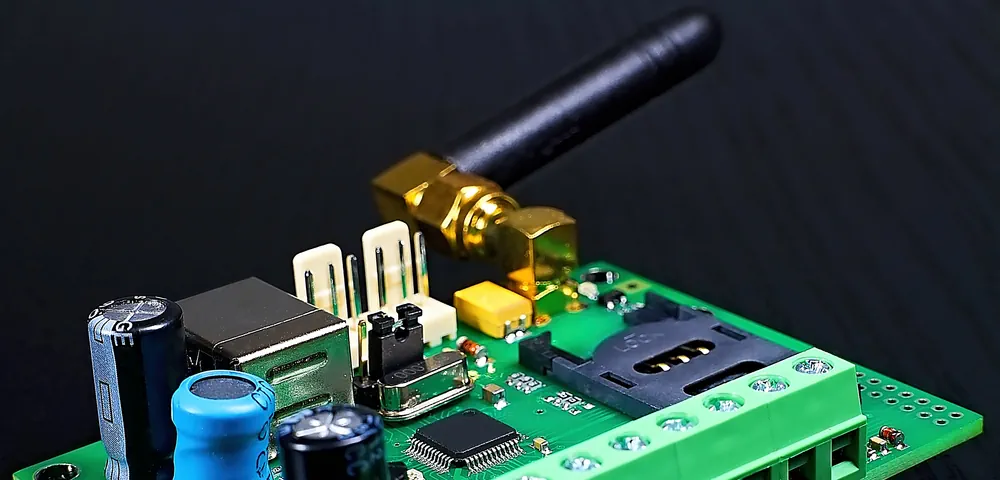
Software-defined radios have upended everything we thought we knew about wireless communication. The old rulebook? Tossed out the window. And nowhere is this shift more pronounced than in antenna design, where engineers are grappling with demands that would've seemed absurd just a decade ago.
I still remember the first time I cracked open an SDR unit and realized the sheer audacity of what these systems were trying to accomplish. The antenna wasn't just a passive chunk of metal anymore, it was being asked to perform acrobatics across frequency ranges that would make traditional designs weep. This is the new reality: antennas must be nimble, adaptable, and frankly, a lot smarter than they used to be.
Traditional antenna design followed a pretty straightforward playbook. You had your radiation patterns, your gain measurements, your impedance matching, your bandwidth constraints. Engineers would optimize for a specific frequency or a narrow band, tune everything to perfection, and call it a day. The goals were clear, the constraints were understood, and the physics behaved predictably. It was almost serene in its simplicity.
SDR technology, on the other hand, laughs in the face of such simplicity. These systems can hop between frequencies, shift protocols, and reconfigure themselves on the fly. They're the Swiss Army knives of the radio world. But here's the rub: your antenna needs to keep up with all that flexibility. You can't just slap a conventional dipole onto an SDR platform and expect miracles. The antenna becomes a bottleneck, a limiting factor that can cripple the entire system's performance.
What SDR demands from antennas is borderline unreasonable. Wideband operation isn't just nice to have, it's mandatory. You need to cover multiple frequency ranges without sacrificing too much gain or creating impedance mismatches that'll make your signal look like garbage. The traditional narrow-band antenna, optimized for one specific task, simply can't cut it anymore. This is where things get interesting, and frustrating.
Reconfigurable antennas have emerged as one answer to this conundrum. We're talking about designs that incorporate microelectromechanical systems (MEMS) or varactors, tiny components that allow the antenna to physically or electronically adjust its characteristics. Imagine an antenna that can morph its resonant frequency based on what the SDR is trying to do at any given moment. It sounds like science fiction, but it's very much science fact. I've seen these systems in action, and when they work, they're genuinely impressive. When they don't? Well, debugging a reconfigurable antenna is its own special kind of torment.
Miniaturization adds another layer of complexity. Everyone wants their SDR device to be portable, lightweight, and compact. But physics doesn't care about your size preferences. Smaller antennas tend to have narrower bandwidths and lower efficiency - that's just how the equations work! Material science has become critical here. Engineers are experimenting with metamaterials and fractal geometries, trying to squeeze more performance out of less physical space. Some of these designs look like abstract art, all loops and curves and deliberate asymmetry. There's a reason for that: they're optimized not for human aesthetics, but for electromagnetic efficiency.
Smart antenna systems and beamforming represent another frontier. Instead of broadcasting in all directions like a traditional omnidirectional antenna, these systems can focus their energy in specific directions. They can track moving targets, reject interference from unwanted sources, and dynamically adjust based on the environment. When you pair this with SDR's software flexibility, you get something genuinely powerful.
One of the more fascinating developments I've encountered involves machine learning algorithms that tune antenna parameters in real time. These aren't just preprogrammed lookup tables, they're systems that learn from their environment and optimize themselves. Neural networks can predict optimal antenna configurations faster and more accurately than traditional optimization methods. I'll admit it; it's a bit eerie watching a machine figure out antenna tuning strategies that human engineers never would've thought to try.
The practical applications of all this are sprawling. In IoT deployments, where devices need to communicate across different frequency bands and protocols, SDR-antenna combinations offer unprecedented flexibility. Emergency response teams are using SDR systems with adaptive antennas to maintain communications in disaster zones where infrastructure has failed. The military, unsurprisingly, is pushing the envelope even further with systems that can operate covertly across a huge range of frequencies while minimizing their electromagnetic signature.
But let's not pretend this is all smooth sailing. Designing antennas for SDR is genuinely difficult. You're balancing competing demands that often contradict each other. Want wideband operation? Prepare to sacrifice some gain. Need compact size? Say goodbye to efficiency. The trade-offs are brutal, and there's no bulletproof solution that solves everything.
What frustrates me sometimes is how underappreciated this work is. Everyone gets excited about the software side of SDR, the fancy GUIs and the ability to decode exotic signals. But without a properly designed antenna feeding clean signals into that software, you've got nothing. The antenna is the gateway between the ethereal world of electromagnetic waves and the concrete world of digital processing. Mess that up, and your expensive SDR is just a paperweight.
Looking ahead, the relationship between antennas and SDR will only get more intertwined. We're moving toward what some call the "software-defined antenna," where even more antenna characteristics are controlled programmatically. The line between hardware and software continues to blur, and honestly, that's where the real innovation lives. It's not enough anymore to be just an RF engineer or just a software developer. You need to understand both domains and how they interact.
The future of wireless communication depends on getting this right. As we push toward 6G, satellite internet constellations, and pervasive IoT networks, the demands on our antenna systems will only intensify. The old approaches won't work; they're already creaking under the strain of current requirements. We need genuinely new thinking, drawing on disciplines that traditionally haven't talked to each other much.
For tech enthusiasts diving into this world, my advice is simple: don't treat the antenna as an afterthought. It's not just a wire you attach to your shiny new SDR dongle. It's half the system, maybe more. Experiment with different designs, understand the trade-offs, and respect the physics. The electromagnetic spectrum doesn't care about your convenience, but with the right antenna design, you can bend it to your will. That's the real power of SDR in this era.